Silent Images teaches Myanmar’s leaders how to tell their own stories

Matthews – Mint Hill Weekly

Thanks to a recent mission carried out by David Johnson, founder of Matthews-based nonprofit Silent Images, Myanmar citizen leaders can now use their newly acquired leadership skills and training to create more opportunities for future generations. Photo courtesy of Silent Images.

MATTHEWS – Tucked away at the corner of an alley on John Street in Matthews, the whole world unfolds – the beauty, the suffering, the sadness and joy. Captured by cameras, Silent Images founder David Johnson brings the nature of human kind into focus.

Since 2006, Johnson has risked his life to tell the stories of oppressed people by traveling across the world as a humanitarian photographer and storyteller.

“Even though it’s scary, we (his team) know we are making a difference … the risk is worth it, knowing you are doing this to help others,” said Johnson, a 39-year-old resident of downtown Matthews.

Johnson traveled to Myanmar for the first time in 2011 to meet the Kachin people, who had become internally displaced because of the renewed violent attacks on their villages by Burmese soldiers. Most were living in refugee camps in the Kachin State, near the border of China. He captured the stories of displaced people, who were suffering but still had hope for a better tomorrow. The Art Institute in Charlotte hosted Johnson’s gallery on the Kachin community from May to July 2012.

Burma, an Asian country now known as Myanmar, has experienced political unrest since the 1960s, when the government was overturned by its own military regime. Each province formed its own protest groups and armies to defend its homes and push for democracy.

Fast forward to 2015, and the political climate has changed drastically. While the country and many of its people still face challenges – from farmers protesting for their land rights in Monywa to the oppression of the Rohingya Muslims at the hands of extremist Buddhists – Johnson said he’s seen a lot of growth.

“There’s more life in Myanmar, businesses are growing, new construction (is) underway and the first democratic elections are this year,” he said.

Johnson’s current role in Myanmar gives evidence of this change. His fifth trip takes him back not only to capture untold stories for other nonprofits, but also to share his gift of storytelling with Myanmar’s citizen leaders, empowering them to tell their own stories.

The DeBeor Family Foundation of Wichita, Kansas, hosts the DeBeor Fellowship for Myanmar leaders for the second year. Young entrepreneurs, business leaders and nonprofit founders apply for the yearlong fellowship, where corporate, educational and non-government organizations’ experts from Myanmar, southeast Asia and western countries travel to Yangon and provide free training and mentorship.

Johnson, who also returned to teach photography and storytelling for his second year with the fellowship, said 38 Myanmar fellows attended their first of three seminars last month. The DeBeor Foundation provides each fellow with a camera, and Johnson said he teaches them technical skills, such as composition, and purposeful photography – meaning how to use a camera to tell the stories that align with their missions.

He’ll return in May to assess their work, pick out their gallery of photos and help create videos from the stills.

Johnson said the most significant part of this fellowship is giving the power back to the people.

“These people have been taught to suppress the individual, and now they are being encouraged to tell their stories,” he said. “This wasn’t possible five years ago – it’s a pivotal season for them.”

Yin Myo So, a 2014 DeBeor Fellowship graduate, agrees.

“Whenever we go back to our area and contribute what we’ve shared and learned not only from the DeBeor Fellowship, but … that the future is in the hands of young Myanmar/Burmese people,” she said in a video on the DeBeor Fellowship’s website, http://deboer.clickcom.com.

Johnson said he feels honored to donate his time to the fellowship and the people of Myanmar. He hopes to continue teaching photography and storytelling there, teaching himself out of a job and passing that role on to this generation of Myanmar leaders.

“If Westerners are still leading, we haven’t done our job,” he said. “We have to put the power and opportunity back into the hands of the people.”

Silent Images is a Matthews-based nonprofit that tells the stories of oppressed and impoverished people in the U.S. and abroad. Find more information about Silent Images at http://www.silentimages.org, or call 704-999-5010.
Posted in Education, Entertainment/Creative Arts, Events and Galas, Human Interest, Human Rights, Matthews-Mint Hill Weekly, Newspaper, Philanthropy, Traditional Journalism | Tagged , , , , , , , | Leave a comment

REINVENT FAMILY VACATION AT SUMMER CAMP

Charlotte Parent 

Written by:  Crystal O’Gorman
Date: February 1, 2015

Trade travel itineraries and hotel continental breakfast this summer for camp-counselor-led activities and campfire s’mores. Family camps offer a vacation alternative that releases “real-world” obligations from every family member and allows the freedom to have fun and foster family bonds without interference from social media and societal conventions. It also provides a new take on an old tradition, creating a charming and challenging experience that includes every member of the family.

Bob Ditter, a child and family therapist and author of “Summer Camp Rules!” has been consulting family camps since the 1980s. “The greatest aspect of family camp is the unique opportunities families have to play together. Given how busy, stressed and technologically-distracted family members can be, family camp offers an opportunity to connect through fun and play,” Ditter says. “Experiences like rock-climbing, puppet-making and fire-building provide opportunities for family members to engage in ways that go beyond their roles at home.”

“Family camp also is an opportunity for first-time campers and camp families — who might not be used to the camp experience due to the young age of a child cultural traditions, or time spent in other enrichment programs outside of the family — to explore and acclimate to the camp experience together, says Peg Smith, CEO of American Camping Association.

The Family Camp Experience
Family camp builds on the traditional summer camp for children, allowing parents to join in on the action and relive their beloved childhood camp experiences hand-in-hand with their children. The programs vary from camp to camp. Some are day camps or one-nighters; however, most family camps take place over a weekend.

Depending on length of stay and budget, family camps fall in a wide price range from $30 for a one-night stay to over $1,500 for a long weekend. Family camps also provide a variety of residential arrangements from private cabins to gender-specific lodging to large sleeping halls. These camps include opportunities for large extended families, mom and daughter, father and son and single parents.

With an ample amount of family camps taking root in North Carolina, from Camp Seafarer on the coast to Camp Highlander along the Blue Ridge Parkway, parents can choose the best fit for their family’s interest.

Each camp’s location influences unique amenities and activities offered, but most have traditional camp activities like arts and crafts, drama and team sports.

Throughout the last eight years, the ACA has seen a 17 percent increase in the amount of residential camps that offer family camp programs. Having more options means parents have a better chance to find the right fit for their family.

Overall, family camps offer a rustic environment where families can step away from technology and immerse themselves in physical, intellectual and relationship-building activities. Parents and children can participate in activities together, as well as encourage each other to accomplish things that they may have never thought was possible.

Play and ‘Girl’ Power
Wake up with the sun to the sound of birds chirping in harmony. Fall asleep on the sleeping porch under the stars, cicadas and crickets serenading the moon. Experiencing life united with nature is a beautiful, magical experience, and Mary Elizabeth Trent, a child psychologist from Watkinsville, Ga. couldn’t agree more after her experience at Skyland Camp for Girls located in Clyde.
Last August, Trent and her 6-year-old daughter Maddy Solomon took part in a 97-year-old tradition. They spent three days and four nights nestled in the Great Smoky Mountains at the “Big House” – a Victorian grand hotel built in the late 1800s that was renovated by Susan Courtney Harris, a pioneering nature-lover and beloved mother of five, in 1917 to accommodate young girls and their mothers.

“Being outside in this beautiful environment was such a nurturing and empowering experience,” she says, “You feel like you are transported to another world.”

Passed down by generations of women, Trent says the camp was ignited with feminine power and positive encouragement in an environment that promoted courage, grit and compassion.

“We got to watch each other have new experiences … stretch our comfort zones,” she says.

Adhering to a traditional camp schedule, this mother daughter duo participated in archery, horseback riding, swimming and arts and crafts.

“Both being introverts, the most challenging activity for us was performing on skit night, but it turned out to be one of the most memorable experiences,” Trent says.

Persistence and Presence

For Kevin and Lori Shannon, seeing their son rise to the challenge was enough to keep them coming back to family camp for the last five years.

“Watching my 7-year-old son climb a 50-foot wooden climbing wall on the first attempt was the most rewarding experience,” says Kevin Shannon, Bank of America retiree and business consulting owner. ”He got a third of the way up, got tired and wanted to quit, but the camp counselors encouraged him and he did it.”

The Shannon’s, who live in Mooresville, wanted to give their son, Colin, a family vacation filled with physical activities outdoors. A fellow church member at Williamson’s Chapel United Methodist Church recommended family camp at Camp Highlander in Mills River.

Camp Highlander offers a four-day, three-night Memorial Day Weekend family camp. It includes a wide variety of activities and team sports such as kayaking, canoeing, riflery, mountain biking, basketball, lacrosse and rock climbing. Families participate in activities together and individually.

“Colin even got to see his mom in a different light, see her strength, in ways he wouldn’t have otherwise,” Kevin Shannon says.

His wife, Lori Shannon, a former nurse turned stay-at-home mom, says being able to be completely present with her family made the experience worthwhile.

“You can go in there thinking you can get something done, bringing projects from home, and then you get there and you forget about the world for three days,” she says.

She was also very comfortable at Camp Highlander, because each family stayed together in their own cabin, giving them time to rest and reflect as a family.

“This is one of the few things that we do that is just us. We will go back again this year,” Kevin Shannon says.

The Psychology of Camping
The Journal of Experiential Education conducted a mixed-methods study in 2013 with 60 families across 18 camps. Eighty-six percent of families responded that family camp experiences strengthened family relationships.

How could it not? Given that the opportunity plucks families from their fast-paced, often over scheduled lives and places them in a simpler environment. No distractions from Twitter and Facebook. Just real face time to talk, goof off, play and be together.

Christopher Thurber, a clinical psychologist and professional educator from New Hampshire has been attending camp since he was 4 years old, and has worked at the YMCA’s Camp Belknap for more than 30 years. “Families come in all shapes and sizes, and they are the cornerstone of a healthy society. When families share healthy time together and have the opportunity to interact with other families, they become closer, stronger and happier,” he says.

It’s the remedy to that old adage: families that play together, stay together. Family camp provides the ultimate opportunity to play among the great outdoors and invest a little more fun in family.

Crystal O’Gorman is a freelance writer who lives in Indian Land, S.C. with her husband Ryan and her children, Mikey, 4, and Bella, 2.

– See more at: http://www.charlotteparent.com/articlemain.php?Reinvent-Family-Vacation-at-Summer-Camp-5294#sthash.EKq6n71h.dpuf

Posted in Charlotte Parent, Entertainment/Creative Arts, Family and Parenting, Health and Wellness, Magazine, Traditional Journalism | Tagged , , , | Leave a comment

One7 provides refuge for those who need help

The Charlotte Observer
City News
Sunday, January 25, 2015

OLYMPUS DIGITAL CAMERA

David Garrett never expected to open an after-school program for impoverished and underprivileged children.

Garrett grew up in Tennessee, the son of a judge, but said he spent his teens and early 20s selling drugs and acting recklessly.

He said he never expected he’d one day spend his time acting on his faith.

“I’d go to church and listen, but I didn’t get it. … It didn’t hit me until my father passed away; I reached rock bottom and was hit by the light,” he said recently. “Once I got it, I could never look back. I wanted to save the lives I’d hurt the most.”

Garrett moved to Charlotte in 2008, where he worked as a youth pastor at Forest Hill Church’s former Mosaic Church on Albemarle Road and at Nexus Church off North Tryon.

Garrett said he appreciated the opportunity but felt limited working within a church.

“I wanted to reach the community in their everyday lives,” he said.

Garrett, his wife, Mary Catherine, and their three children acted on their faithto open the nonprofit One7, and they continue to commit all their time and money to help struggling families and children.

Pictured left to right: Kate Munroy, Rebekah Goode and One7 Director David Garrett

Pictured left to right: Kate Munroy, Rebekah Goode and One7 Director David Garrett

One7 is a faith-based organization that provides housing, mentoring, a soccer league, private girls’ academy and an after-school program for inner-city youths and families in need. The programs are privately funded by local families and churches.

One7, off Eastway Drive, is housed in an old apartment complex. The building has been painted white and a tall black fence lines the 1.12 acres. Soccer fields take up most of the green space, and gym lockers fill the corridor.

There also is graffiti on the outer walls and inner courtyard, and inspirational rap music blares from speakers on the second floor.

While the two-story multifamily dwelling doesn’t compare to some high-end complexes not far away, what goes on inside makes One7 shine. Homeless refugee families and abused and abandoned children are given a place to call home.

The home is far from ideal; Garrett, who’s also Garinger High School’s soccer coach, said he’s been shot at and had his vehicles burned by angry gang members in the area.

“We take the kids nobody wants,” he said. “We try to help families torn apart by the cycles of abuse and addiction come back together.

“What we do takes guts, compassion, patience and lots of love.”

Garrett said the facility has 16 one-bedroom housing units that have been converted into two-bedroom apartments. Most who live there don’t contribute financially because of their circumstances.

“If we see a need, we make sacrifices and do what we can to help,” Garrett said.

Next to the complex, beyond the playground, the Garretts lease a house and garage that has been converted into three classrooms. These two spaces house an after-school program for 75 elementary students from Billingsville, Merry Oaks and Briarwood.

Inside, students from kindergarten through fifth grade sit in groups, most smiling and laughing with peers as they complete homework with the help of volunteers and guided instruction from the program’s resident academic coordinator and co-director, Rebekah Goode.

Goode, who worked as a teacher at Westerly Hills Academy for 14 years, said she felt fortunate to work in the community.

Goode created One7’s after-school program, a multicultural literature-based program that focuses on increasing vocabulary, phonics and critical thinking.

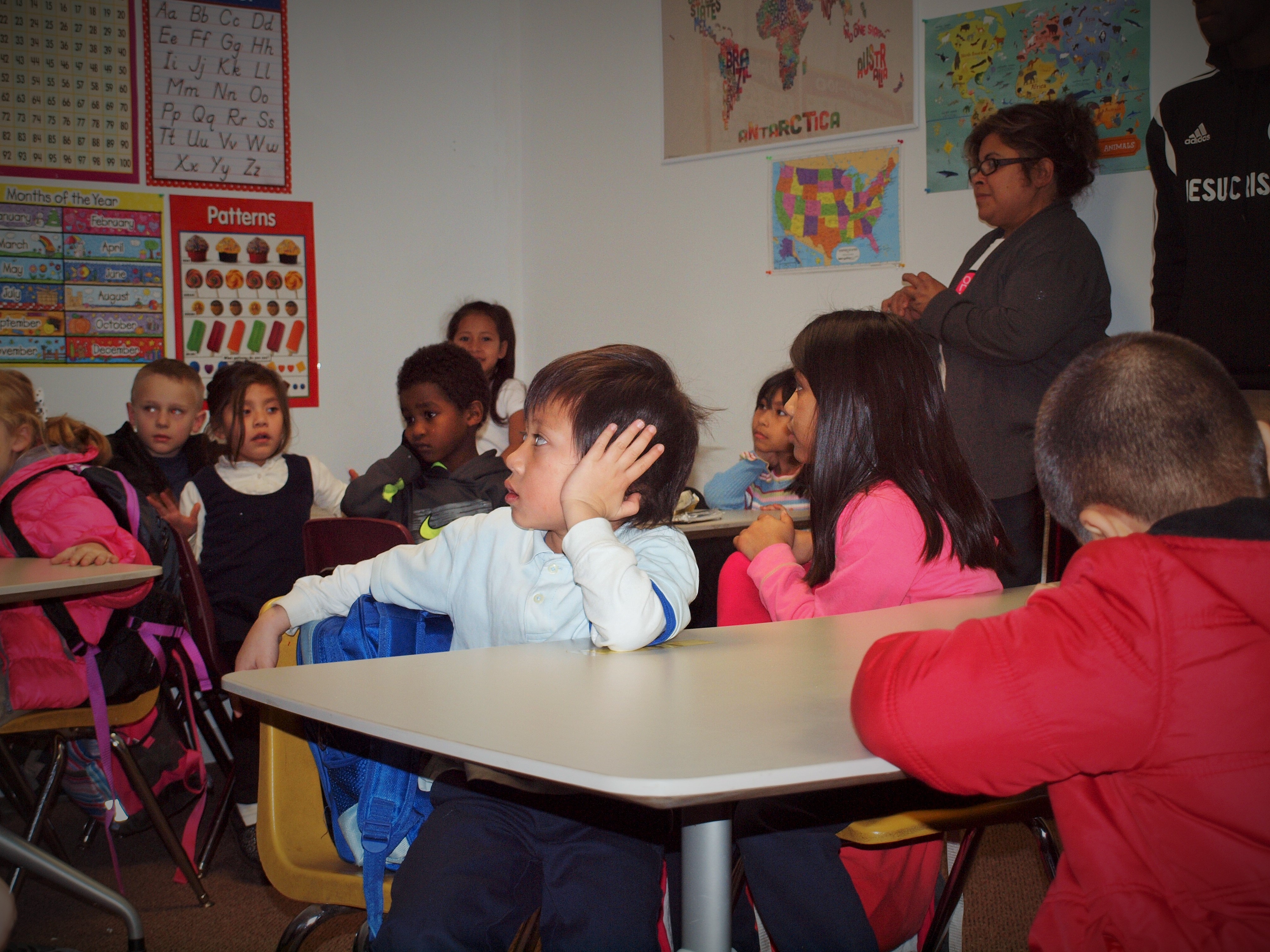
During a recent session, students in kindergarten through second grade gather around Goode, chairs pulled in from separate classrooms.

Standing in the middle of this brightly decorated room filled with academic posters of the alphabet and numbers and maps of the world, Goode asks students to answer questions about a children’s picture book, “The Mitten,” based on a Ukrainian folk tale.

The students eagerly raise their hands to answer.

Emilio was the first to speak up about the story, giving a precise summary of the interactions between characters. Goode then animatedly acts out vocabulary words, using her body to emphasize the meaning of “trudging.”

Goode, who lives in Mint Hill, said, “These activities help them learn a second language through pictures … and the stories open their mind to other cultures, while also helping them to feel accepted for their differences.”

Kate Monroy, 20, co-director of the after-school program and One7’s administrator and residential staff member, said most of the students are refugees or immigrants – predominantly Montagnard, Latino, Burmese and Nepali – and come from 30 or more countries; however, some students are U.S.-born Latinos or African-Americans.

“Beyond their educational needs, this after-school program has also helped us build more relationships in the community and touch more lives,” Monroy said.

Posted in Charlotte Observer, Education, Human Interest, Newspaper, Philanthropy, Spirituality and Religion, Traditional Journalism | Tagged , , , | Leave a comment

Youth group in Charlotte region battles sex trafficking

The Charlotte Observer

City News
Sunday, January 25, 2014

OLYMPUS DIGITAL CAMERA

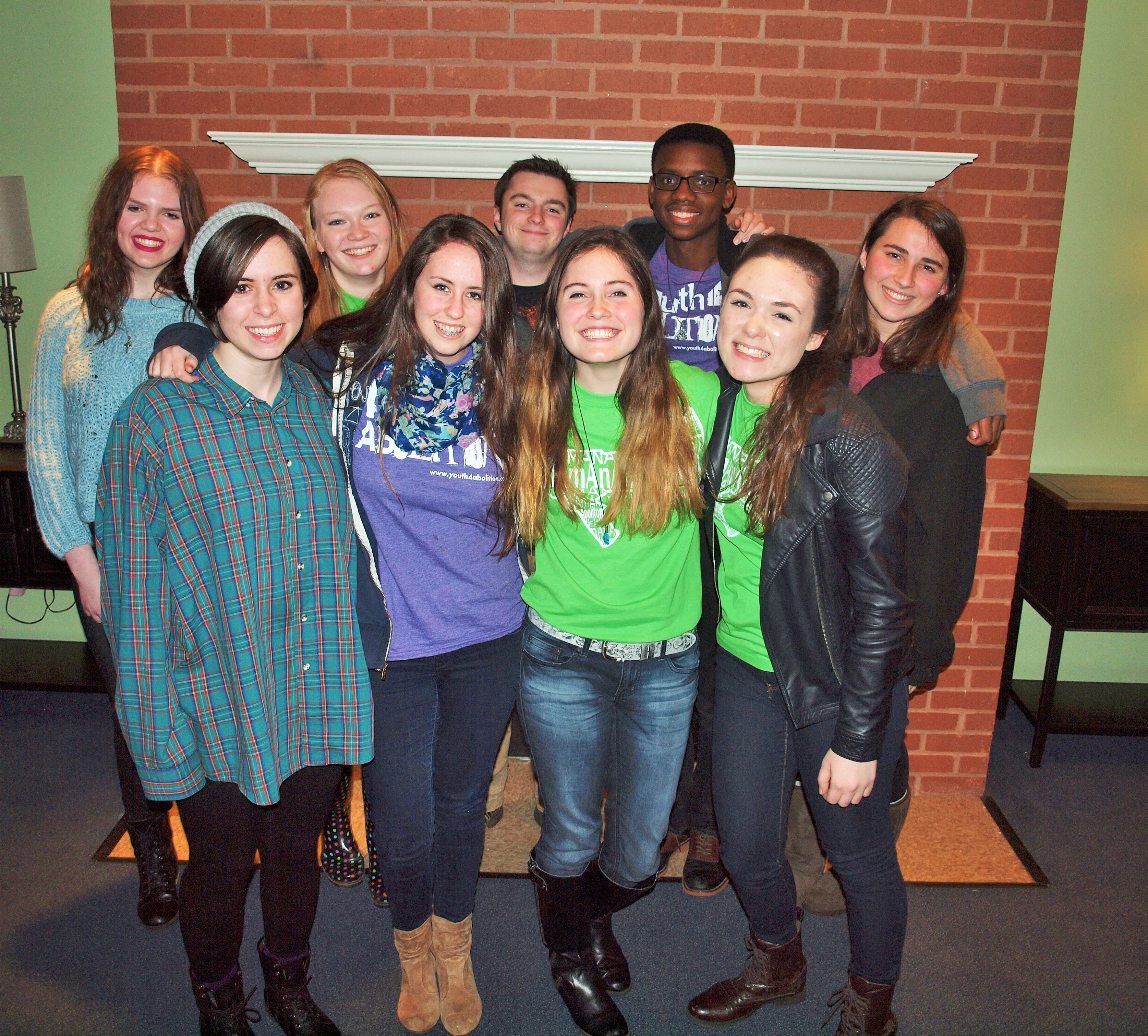
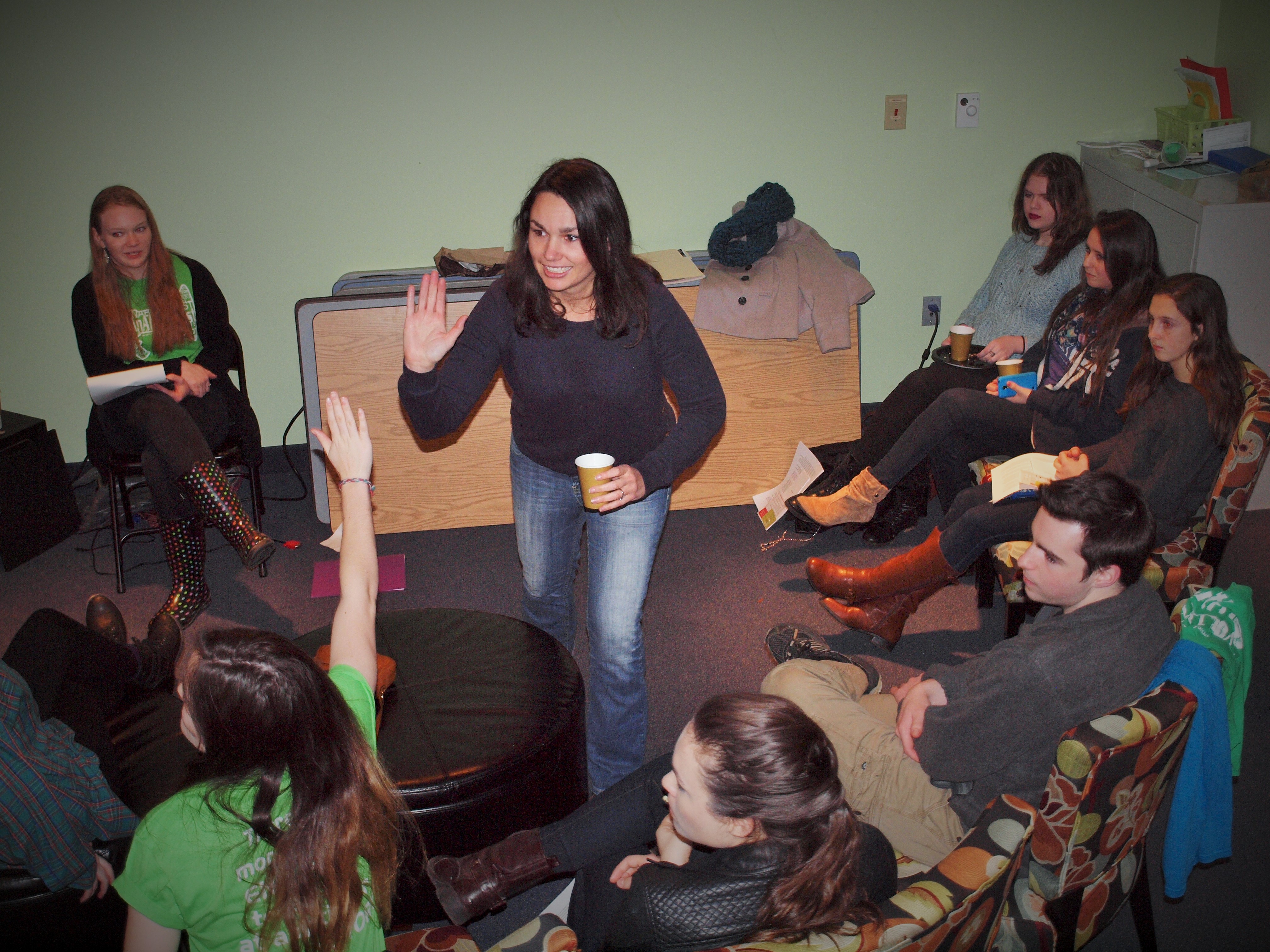
Eleven Charlotte-area teens voluntarily meet at Christ Covenant Church to learn more about domestic-minor sex trafficking and raise awareness to prevent it.

Known as Youth4Abolition, a N.C. chapter-based program under Gastonia’s On Eagles Wings Ministries, the group is a nonprofit, sex trafficking prevention, outreach and after-care center. They work within the greater Charlotte area to raise awareness about sex trafficking.

Youth4Abolition members participate in fundraising for On Eagles Wings Ministries and provide information on sex trafficking at community events.

Chapter Leader Elizabeth Padgett, 18, also speaks out against human trafficking statewide. She said her message has reached more than 2,000 people. She has spoken at Steele Creek’s Good Shepherd United Methodist Church, Tsunami Ministries in Winston-Salem, and will speak for the second consecutive year at the Women of AT&T Girls Technology Day in Charlotte.

Padgett, a junior who attends Grace Academy in Matthews and lives near Quail Hollow said, “This has been an eye-opening experience for me, learning how to identify potential threatening situations and to hear how the identifying factors I’ve presented have helped others become aware of the real dangers of human trafficking.”

According to the U.S. Department of Justice, up to 300,000 U.S. children become victims of sexual exploitation every year. The Polaris Project runs a national human trafficking resource hotline and ranks North Carolina as one of the top 10 states with call-in inquiries for survivor support and reports of potential human trafficking.

OLYMPUS DIGITAL CAMERAThat’s why these youth abolitionists sit comfortably together in a semicircle of floral-printed accent chairs, eyes, hearts and minds wide open, exploring and identifying the mental, emotional and physical circumstances surrounding domestic minor sex trafficking.

On Eagles Wings Ministries Director of Prevention Autumn Hanline oversees the chapters and created curriculum to coordinate with their monthly meetings.

Youth4Abolition’s January meeting discussion painted a picture of those most vulnerable to sex trafficking. Statistics provided by Girls Educational and Mentoring Services show that many victims are impoverished; living in single-parent homes, foster care or are runaways; and may be former victims of sexual abuse.

“The biggest misinterpretation is that people are forced in against their will. But more often, that’s not the case,” Padgett said. “They are coerced by the promise of protection and love.”

Fiona Glaser, a member, told the group, “There always seems to be something missing in their (victim’s) lives, and (the victims) are willing to do something else to get their needs filled. … It makes me want to do something, give them a hug.”

Shannon O’Grady, 18, attends Union Academy Charter School in Monroe. She’s been a part of this chapter since Padgett started it in March of last year.

“It’s really powerful to be a part of a group that teaches young girls becoming women about the realities of trafficking,” she said. “We are so vulnerable. Given technology and social media, it’s important to get this out there.”

Posted in Charlotte Observer, Human Rights, Newspaper, Philanthropy, Traditional Journalism | Tagged , , , , , | Leave a comment

Gaston’s Sleepout for the Homeless sets stage for homeless count

The Charlotte Observer
Gaston/Catawba News
Sunday, January 12, 2015

- UNITED WAY OF THE GREATER TRIANGLE The idea for the Sleepout for the Homeless in Gaston County came from a similar event held by the United Way of the Greater Triangle last year.

– UNITED WAY OF THE GREATER TRIANGLE
The idea for the Sleepout for the Homeless in Gaston County came from a similar event held by the United Way of the Greater Triangle last year.

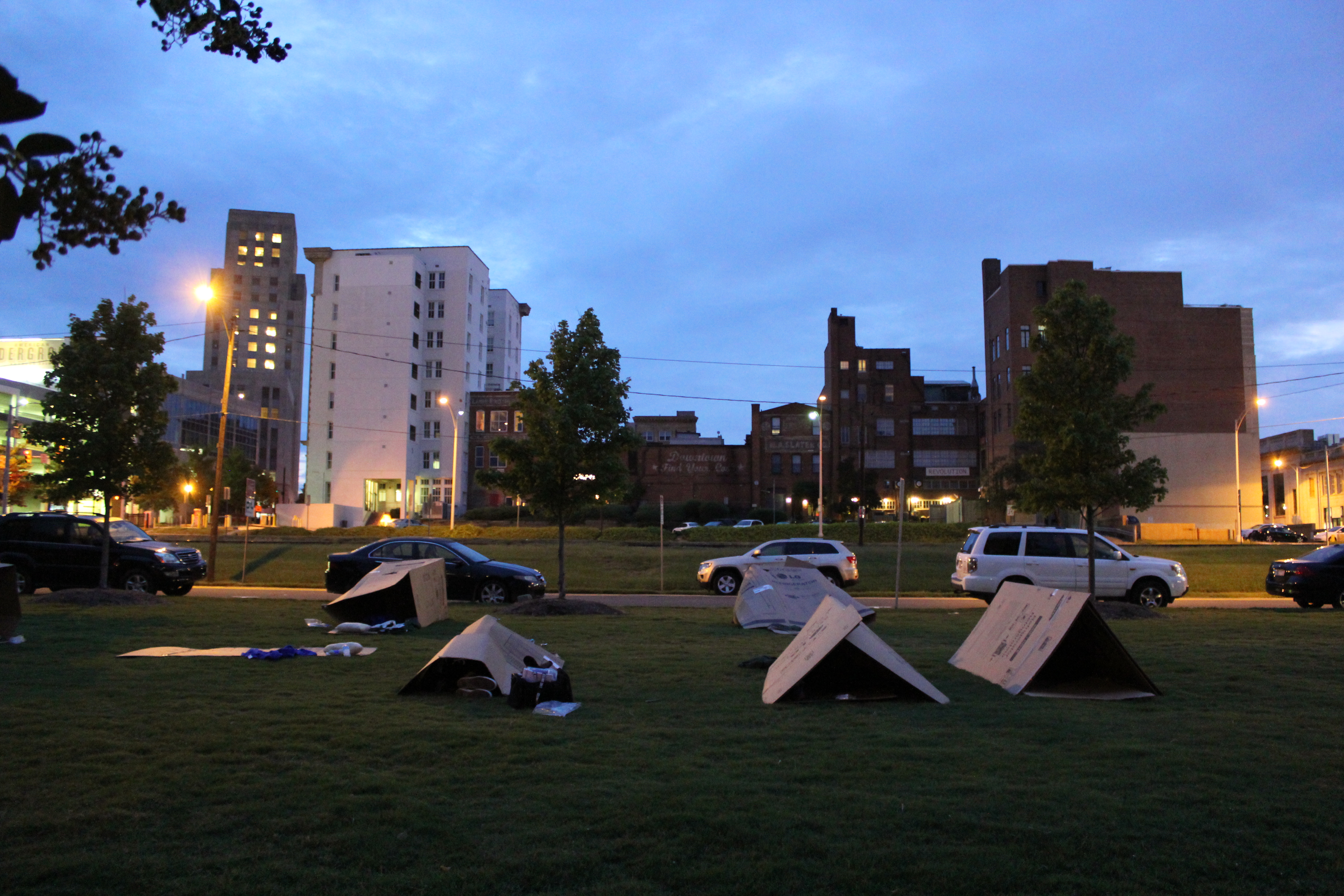
Imagine sleeping outside on a cold winter’s night with minimal material comforts.

The United Way of Gaston County urges residents, organizations and business owners to experience sleeping in the same conditions as a homeless person to raise awareness of homelessness in Gaston County.

The inaugural Sleepout for the Homeless takes place from 6 p.m. Jan. 24 to 6 a.m. Jan. 25 in the United Way of Gaston County’s parking lot.

The idea came from a similar event held by the United Way of the Greater Triangle last year.

“The event will also be tied to a one-night online fundraising drive to benefit organizations that work with the homeless in Gaston County, along with a food and personal care item drive throughout the month of January,” according to the United Way’s website.

With more than 20 people, businesses and organizations already signed up, campaign manager Ashley Smith said more people are interested than they first anticipated.

“Initially, we didn’t think there would be many people interested in sleeping outside overnight, so we had planned on having a small group of us sleeping on the ground with sleeping bags, gloves and jackets,” he said. “Since the response has been much more enthusiastic, we are letting people who attend choose how they want to support the homeless.”

- UNITED WAY OF GASTON COUNTY Sleepout for the Homeless will be held Jan. 24 in the United Way of Gaston County’s parking lot, 200 E. Franklin Blvd., Gastonia. Sign up for the event or find out ways to donate by visiting, http://unitedwaygaston.org/sleepout/ or by calling 704-864-4554.

– UNITED WAY OF GASTON COUNTY
Sleepout for the Homeless will be held Jan. 24 in the United Way of Gaston County’s parking lot, 200 E. Franklin Blvd., Gastonia. Sign up for the event or find out ways to donate by visiting, http://unitedwaygaston.org/sleepout/ or by calling 704-864-4554.

Participants can choose how long they plan to endure the elements, whether that’s a couple of hours, all night or allowing group members to sleep in shifts. Smith also said they are planning to have a kickoff meal for those involved.

The event was also created to raise awareness for the Homeless Point in Time Count, also known as PIT. One day each January, a team of volunteers make contact with all the homeless people in the counties. During that time, they provide supplies, such as a backpack, gloves, food and toiletries, and they gather information about each individual’s living situation. The data is compiled to give annual statistics on local homelessness. These stats help community leaders determine how to better serve the homeless.

Gaston, Lincoln and Cleveland counties’ PIT Count will take place Jan. 28.

Smith, 29, is also the PIT Count coordinator for Gaston County. He said, “Last year, PIT counted 118 unsheltered homeless in our county on a night with freezing temperatures and snowy conditions.”

The United Way of Gaston County’s website states that more than 400 homeless people were identified in the tri-county PIT Count last year. They counted people who were living without shelter and those in churches, homeless shelters or other temporary living conditions.

James Burgess, chairman of the Continuum of Care, said his job is to oversee the PIT Count and work with community leaders to find ways to improve the lives of the homeless. Burgess, along with Bill Steury, president of Cross Co. – Automation Group and longtime supporter of the United Way, were instrumental in bringing Sleepout for the Homeless in Gastonia to the attention of the United Way.

“It’s a great opportunity to engage the community, foster awareness and to give the folks who participate a point of reference,” said Burgess.

Smith hopes this event will give the community a real-life experience of what it’s like to be homeless, as well as start a dialogue to better serve the local homeless community.

“Changing our community starts with identifying the roadblocks that hold people back from having a happy and successful life,” he said. “Homelessness is often a symptom of other problems affecting individuals and families. If we want to truly fix problems, we must start identifying the root causes and that means having a very public dialogue about the issues of homelessness and income instability.”

Posted in Charlotte Observer, Newspaper, Philanthropy, Traditional Journalism | Tagged , , , , , , | Leave a comment